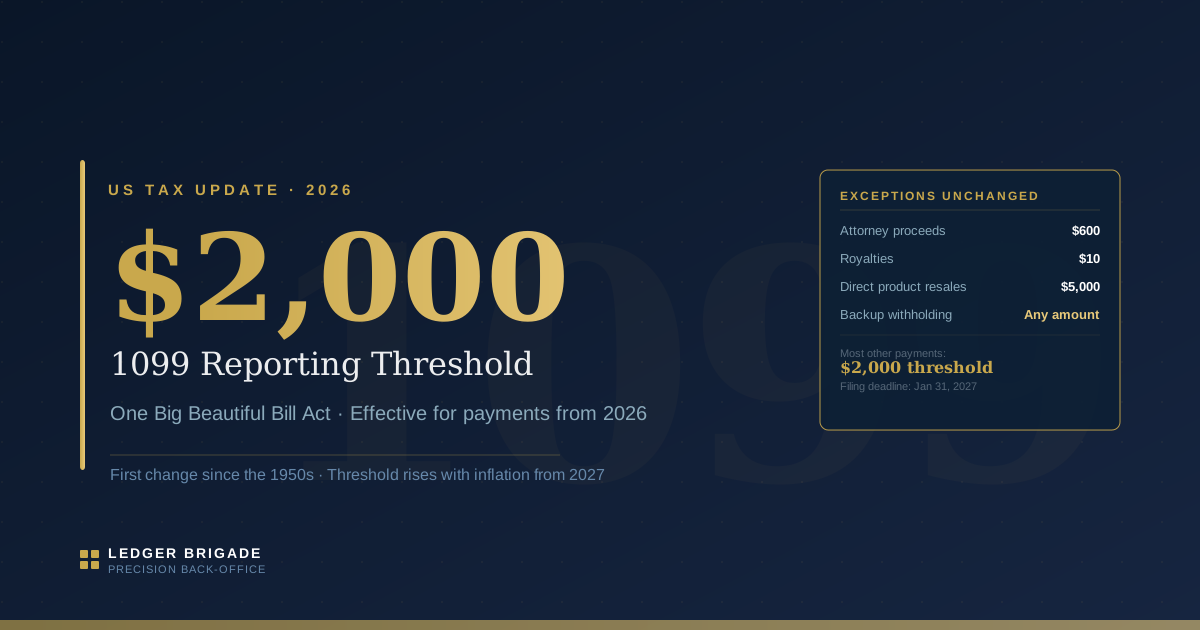
Under the One Big Beautiful Bill Act (OBBBA), the IRS 1099 reporting threshold for most payments has jumped from $600 to $2,000, effective for payments made from 2026 onward. It's the first change since the 1950s, and from 2027, the threshold will rise automatically with inflation.
If you write checks or process ACH payments to vendors, contractors, landlords, or service providers, this matters for your year-end close. Fewer forms doesn't mean less homework. The exceptions now matter more than ever.
What Changed: The $2,000 Threshold
The following payment types now carry a $2,000 reporting floor (up from $600):
- Nonemployee compensation (freelancers, independent contractors)
- Rents
- Prizes and awards
- Medical and healthcare payments
Any vendor in these categories who receives under $2,000 in a calendar year no longer triggers a 1099. That reduces paperwork, but it also sharpens the edges you need to watch.
What Didn't Change: The Exceptions
Several thresholds were left untouched by the OBBBA. These are the ones most likely to catch businesses off-guard:
- Gross proceeds paid to an attorney (e.g. settlements, legal fees): still $600
- Royalties: still $10
- Direct sales of products for resale: still $5,000
- Any payment subject to backup withholding: report it regardless of amount
The Attorney Rule Nobody Remembers
Payments to attorneys are reportable even if the law firm is incorporated. This applies to settlement proceeds and legal fees alike. A corporate structure does not exempt the payment from 1099 reporting. It's a rule that trips up AP teams every single year, and the OBBBA didn't change it.
Filing Deadline and What to Do This Quarter
The first filings under the new rules are due January 31, 2027, covering all payments made throughout the 2026 calendar year.
- Pull your vendor payments and sort by payment type, not just amount. The threshold varies by category.
- Flag vendors sitting just under $2,000. A single December invoice can push them over.
- Collect missing W-9s now, from every vendor. Waiting until January means chasing vendors who have moved.
- Check your state's rules. Several states maintain their own 1099 reporting thresholds that differ from the federal floor.
Not sure if a contractor needs a 1099? Check in a few clicks with our free Form 1099-NEC checker: the $2,000 threshold for 2026, who is exempt, and your deadline.
The Practical Takeaway
Fewer 1099s in the mail doesn't mean a lighter compliance burden. The change compresses your risk into a smaller group of vendors, and the exceptions (attorneys, royalties, backup withholding) are exactly where errors tend to cluster.
A structured vendor payment review in Q3 and Q4 2026, rather than a scramble in January 2027, is the only reliable way to stay clean under the new rules.
General information only. This post reflects provisions of the One Big Beautiful Bill Act as reported in October 2025. Consult your tax advisor for guidance specific to your situation and jurisdiction.
Comments (0)
Be the first to comment.
Leave a comment